
Ukraine’s Heraskevych Says He Will Compete In Banned Helmet, Defying IOC
CORTINA D’AMPEZZO/MILAN, Italy, Feb 10 (Reuters) – Ukrainian skeleton racer Vladyslav Heraskevych said on Tuesday he will defy an International Olympic Committee ban and compete in his “helmet of remembrance” honouring those killed in the war with Russia.The 27-year-old has been training in Italy with the helmet showing 24 images of dead Ukrainian athletes, but
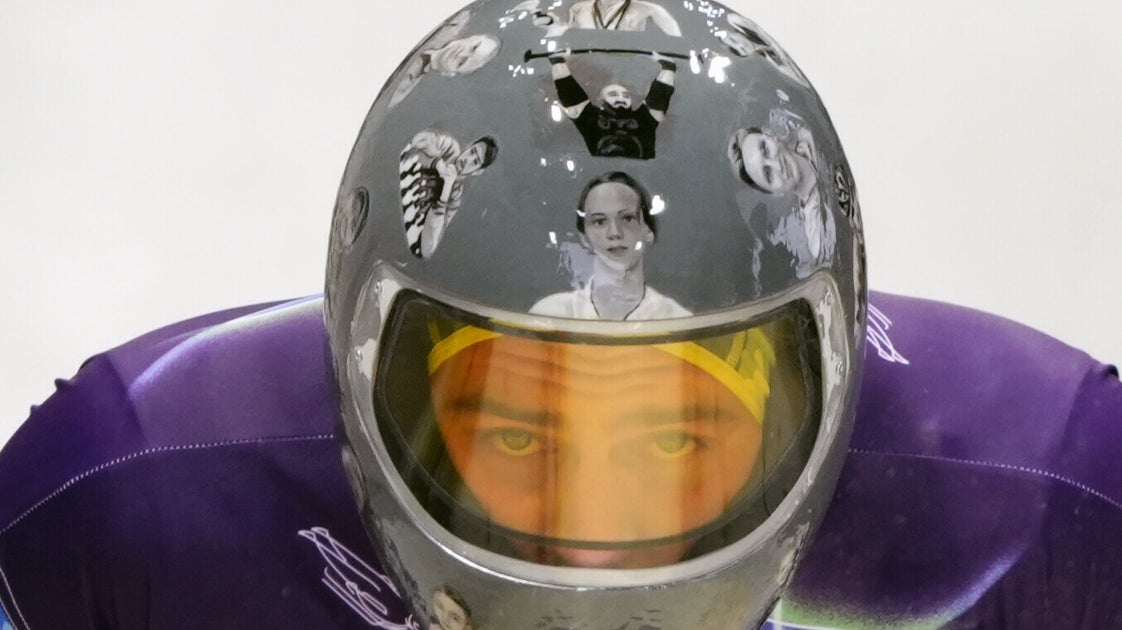
CORTINA D’AMPEZZO/MILAN, Italy, Feb 10 (Reuters) – Ukrainian skeleton racer Vladyslav Heraskevych said on Tuesday he will defy an International Olympic Committee ban and compete in his “helmet of remembrance” honouring those killed in the war with Russia.
The 27-year-old has been training in Italy with the helmet showing 24 images of dead Ukrainian athletes, but the IOC said he could not do so in the competition starting on Thursday due to a rule banning any political statements in the fields of play.
He could instead wear a black armband, it said.
“Because of their (the dead athletes’) sacrifice, we are able to compete here as a team. I will not betray them,” Heraskevych told an outdoor press conference by the Olympic rings in Cortina on Tuesday.
“I believe they deserve to be with me on competition day. I used it yesterday (at training), I used it today (at training), I will use it tomorrow and I will use it on race day,” he said.
Andrew Milligan – PA Images via Getty Images
SUPPORT FROM COACH
“Now I need to think about how I can perform better and how I can be concentrated on the track, but now I’m here, I’m trying to fight for my right to wear this helmet,” Heraskevych added.
Heraskevych, who displayed a “No War in Ukraine” sign at Beijing 2022 days before Russia’s invasion, said he had received encouragement from numerous athletes, and Latvia coach Ivo Steinbergs joined the press conference to voice his support.
“There is a strong support from other nations. Yesterday the president of Latvia came to visit us and he expressed strong support for Vladyslav. If it comes to disqualification we will see what we can do,” said Steinberg.
Ukrainian luger Olena Smaha showed a message on her glove written in English saying “Remembrance is not a Violation” in support of Heraskevych.
ANDREA BERNARDI via Getty Images
IOC OFFERS ARMBAND COMPROMISE
The IOC earlier in the day said the athlete had worn the helmet in training and had expressed his views on social media but could not do so once the competition got under way.
“We tried to address his desire with compassion,” IOC spokesperson Mark Adams told a press conference on Tuesday, explaining the decision. “The IOC fully understands the desire of athletes to remember friends who lost their lives in that conflict.”
Rule 50.2 of the Olympic Charter states that no form of demonstration or political, religious or racial issues can be raised on fields of play or podiums though athletes can express themselves freely elsewhere.
“The Games need to be separated from all types of interference so that all athletes can concentrate on their performances … We need to keep that specific moment as pure as we can for the competition,” Adams added.
“This helmet contravenes the … guidelines but … we will make an exception to allow him to wear a black armband during that competition to make that commemoration … We feel this is a good compromise of the situation.”
NurPhoto via Getty Images
UKRAINIAN POLITICIANS UNHAPPY AT BAN
Heraskevych has received support from his country’s political leaders, including Volodymyr Zelenskiy on Monday and Prime Minister Yulia Svyrydenko on Tuesday.
“More than 650 Ukrainian athletes will never stand on an Olympic stage. They were killed by Russians,” Svyrydenko said in a post on X. “Against this reality, the decision to ban the helmet of our athlete… which commemorates some of our fallen is profoundly wrong. Remembering the dead is not politics. It is dignity.”
“The IOC should honour those who can no longer compete, not silence their memory,” she said.
Heraskevych’s helmet depicts various athletes killed in the war – some of whom were his friends. They include teenage weightlifter Alina Perehudova, boxer Pavlo Ischenko, ice hockey player Oleksiy Loginov, actor and athlete Ivan Kononenko, diver and coach Mykyta Kozubenko, shooter Oleksiy Habarov and dancer Daria Kurdel.
DISPUTE OVER SOCIAL MEDIA POST
In a letter to the Ukrainian Olympic Committee on Tuesday, the IOC asked that Heraskevych take down a social media post in which he names the IOC’s representative who on Monday told him his helmet did not comply with the rules, arguing he was “at risk of being exposed to online abuse”.
“I don’t see any problem with that (naming the representative),” Heraskevych told Reuters.
Following Moscow’s invasion of Ukraine, athletes from Russia and its ally Belarus were largely barred from international sport but the IOC has since backed their gradual return under strict conditions.
Moscow and Minsk say sport should remain separate from international conflicts.
(Reporting by Julien Pretot and Karolos Grohmann; Additional reporting Yuliia Dysa in Kyiv; Editing by Andrew Cawthorne, Ken Ferris and Alison Williams)
Related
0 comments